
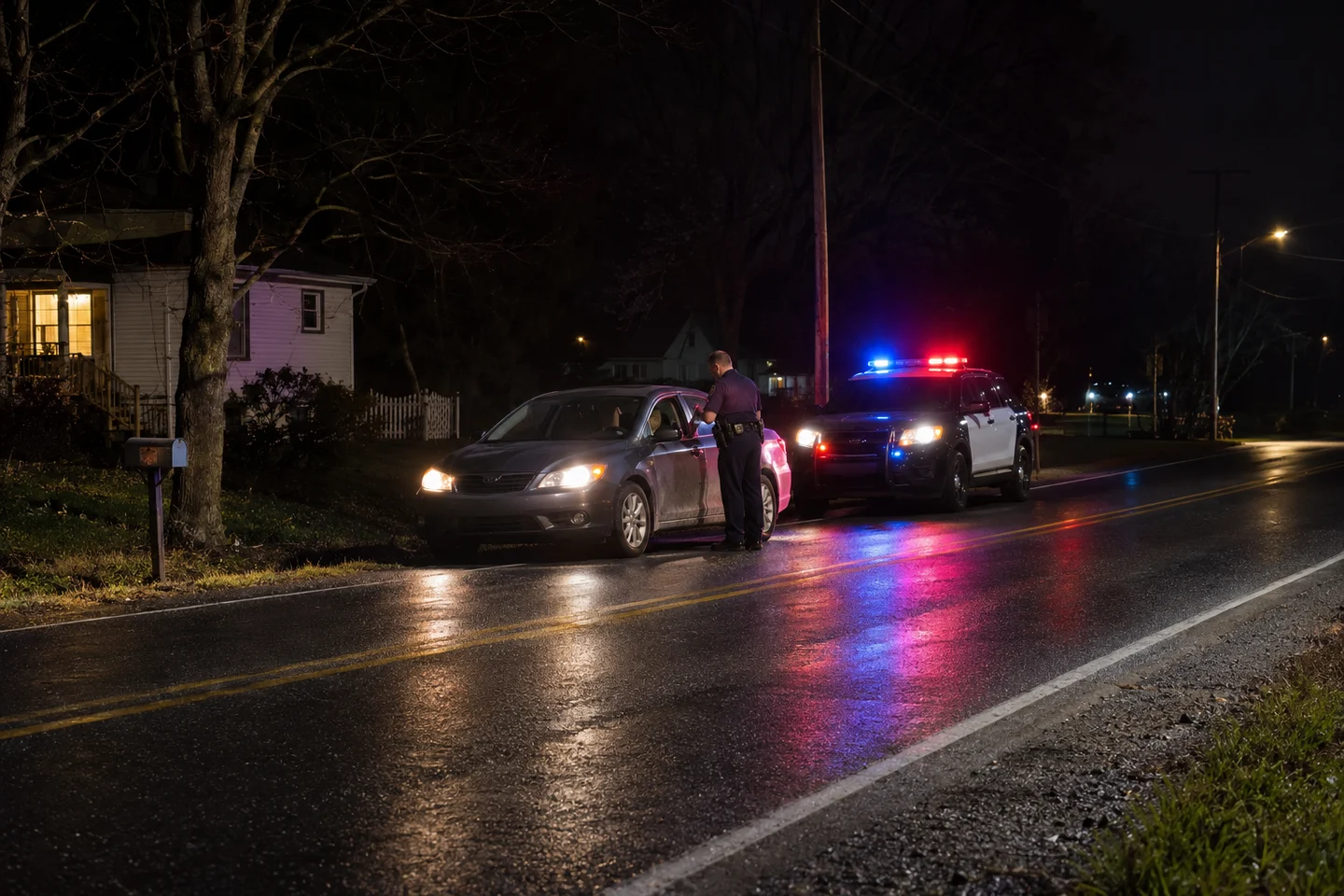
When Did My Speeding Ticket Turn Into a Search?
A traffic stop is an easy place to see the difference between following the facts and seeing how far you can push.
You get pulled over for speeding. Fair enough. You were doing 48 in a 35, and you know it. You hand over your license, expecting a ticket or a warning. Then the officer asks where you’re headed, who owns the car, and whether you’d mind if they took a look inside. Now you’re sitting there wondering what any of this has to do with how fast you were driving. You’re also trying to figure out whether saying no is going to make the next ten minutes worse.
I understand why that bothers people. A stop can be technically lawful and still leave somebody asking why the hell it had to go that far. That question matters. I also understand why an officer might ask more questions. Good police work sometimes starts with a traffic stop and ends up uncovering something serious. Nobody wants cops to ignore what’s right in front of them. But there’s a difference between following something you actually noticed and seeing how far you can push an encounter before the person asks you to stop.
What changed after you pulled them over?
When I was a younger cop, it was easy to think being proactive meant doing more. More stops, more tickets, more arrests. Those are things you can point to at the end of a shift. It’s harder to put a number on the time you recognized that a situation didn’t need anything else from you. As a patrol supervisor, I came to appreciate that decision a lot more.
Say the officer in that speeding stop has no information connecting the car or the driver to anything else. The driver hands over what’s requested and answers a few questions. What problem are we trying to solve by asking to search the car? If the best answer is “You never know what you might find,” then we’re asking somebody to put up with a bigger intrusion based on our curiosity. I can see why a driver would think we’re treating them like a suspect instead of a person who drove too fast.
Now change one fact. Before the stop, dispatch gave the officer a specific report of a serious crime, and there’s a concrete reason to connect this car to that report. That changes the conversation. I’d expect an officer to pay attention to it and be able to explain the connection later. The lesson isn’t to stop asking questions. It’s to know what question you’re trying to answer, and what made it worth asking in the first place.
Asking is one thing. Making no feel like trouble is another.
If you’re asking permission to search, think about what it sounds like from the other seat. You’re in uniform, you’ve stopped their car, and they don’t know when they’re going home. You might think you asked a simple question. They might hear it as, “Say yes, or this is about to turn into something else.”
That’s why an officer’s reaction matters. If you ask and the driver says no, don’t get sarcastic, make it personal, or treat the answer as a confession. If there’s another reason to take action, it should be something you could explain without relying on the fact that the person didn’t give you what you wanted. If there isn’t, do what you actually came there to do and let the encounter end.
The same goes for a driver who tells you they’re lawfully carrying a firearm. I understand why a cop takes that seriously. I also want people to be honest with us. If the person volunteers the information and we treat that honesty like evidence of bad intent, we’re teaching them a lesson we probably don’t mean to teach. Be alert, explain what you need when you can, and base your next decision on what’s happening in front of you.
Judge the decision, not just the result
People film stops. Good. A camera can show you how quickly a cop’s tone changed, or what the driver actually said. It can also miss what happened right before the clip started. I’ve changed my mind after seeing more footage, but “you didn’t see the whole thing” doesn’t answer a question. Show people the missing context when you can, and explain why it changes the decision. If it doesn’t, own that. And if somebody is trying to get a reaction on camera, you still don’t have to give them one.
I want police supervisors to ask one question when we review these stops: What made the next step worth taking? Ask it when the officer finds something, too. Finding something doesn’t tell you whether the decision was sound before you knew what was there.
Most people will never watch the best traffic stop you handle. It’ll be a short, ordinary conversation. You’ll explain why you stopped the car, handle the problem, and everybody will go home. There’s a lot of judgment in knowing when that’s enough.
Comments
Comments are reviewed before they appear. Use a display name and leave out personal information.